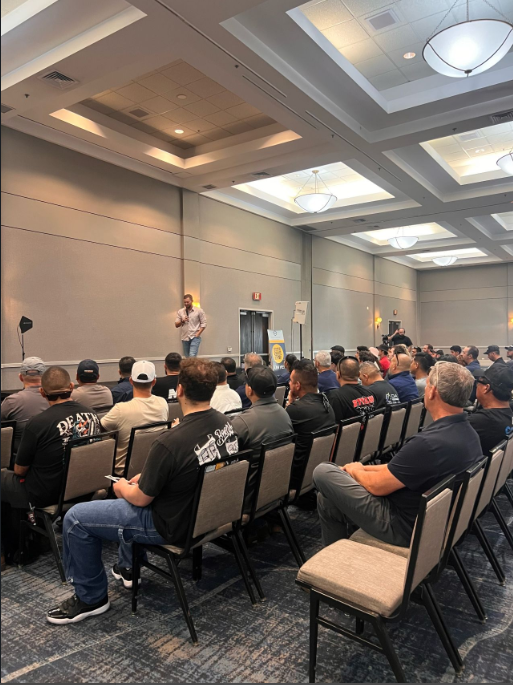
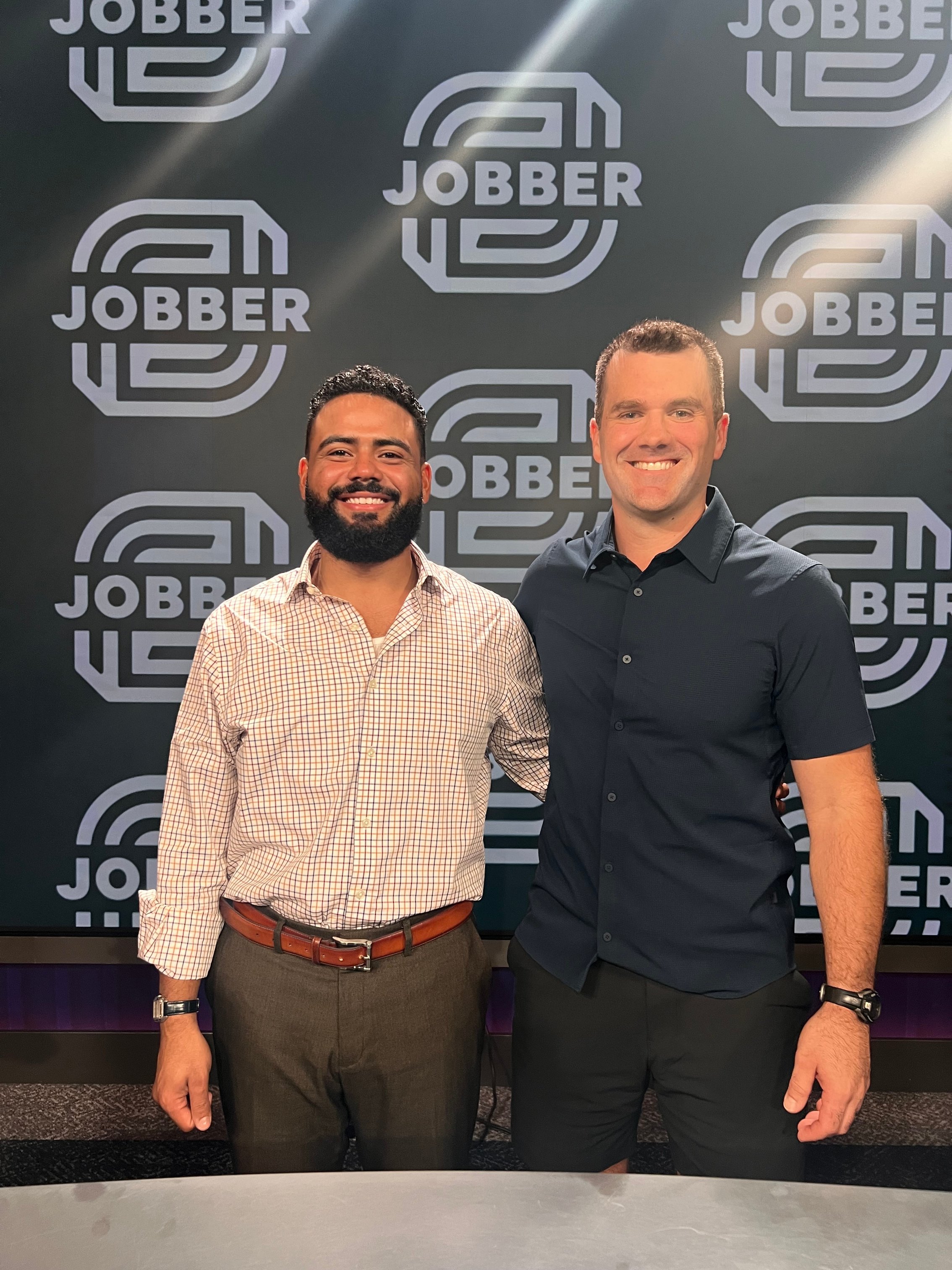
I just got back from a Jobber event in Las Vegas where I had the privilege to speak with other contractors about the realities of our trade. Traveling to a city built on excess made me think about how much waste and inefficiency we tolerate every day in our own businesses. I went to this gathering to bring our experience as electricians and renewable energy contractors into a broader conversation. I spoke on two topics that keep coming up when I talk to tradespeople: finding and training the next generation of workers, and embracing the digital tools that can make our lives easier.
Why I went to Las Vegas
At Energize Us EDU, we don’t just complain about the challenges facing the skilled trades. We look for chances to share what we’ve learned and to learn from others. When Jobber invited me to present at their Las Vegas event, I saw it as an opportunity to put our ideas to the test. The room was full of landscapers, HVAC techs, plumbers, painters and electricians—people who live the same daily grind we do. The conversations confirmed that we’re all dealing with many of the same headaches: a shrinking workforce, confusing regulations, and the struggle to keep up with technology. I came away convinced that our industry needs to start talking to each other more, not less.
Topic 1: Workforce and training
In my first session, I dug into the labour shortage that is hitting every part of construction. According to the Associated Builders and Contractors, the construction industry needs to attract roughly 439,000 new workers this year to meet demandopenasset.com. A report cited by Arcoro says that 62 % of firms can’t find candidates with the skills or certifications they needopenasset.com. When I shared those numbers, I could see heads nodding. We’re all struggling to hire and retain good people, and we’re watching experienced tradespeople age out; more than 20 % of American construction workers are over 55openasset.com. That’s decades of knowledge walking out the door.
I talked about how Energize Us EDU is building apprenticeship pathways and mentorship programs. We can’t wait for schools or the government to fix this problem. We need to open our own shops to trainees, pay them fairly, and give them a reason to stay. I told the story of a young apprentice I hired last year who had never touched a conduit bender. After six months of on‑the‑job training and evening classes, he could wire a service panel without supervision. The pride in his eyes reminded me why I love this work. We can replicate that across the country, but only if we invest time and money into training. The people in that room understood that; many approached me afterwards to share their own stories of hiring rookies and turning them into tradespeople.
Topic 2: Technology and digital tools
My second session focused on another big pain point: technology adoption. The construction industry is being flooded with new tools—AI planning software, digital scheduling, 3D printing and dronesopenasset.com. A 2025 survey found that 44 % of contractors plan to increase spending on AI to optimize scheduling and resource allocationopenasset.com. These tools promise efficiency, but many contractors aren’t sure how to start.
I shared how we use Jobber and other digital platforms to handle scheduling, invoicing and customer communication. It wasn’t easy at first; I’m an electrician, not a software developer. But I realized that failing to adopt digital tools would leave me behind. Now our team can see their schedules on their phones, send estimates in seconds, and collect payments electronically. This frees up time to focus on the work itself. In the session, we workshopped real scenarios: managing a crew across multiple job sites, following up on late invoices, and keeping customers in the loop. The takeaway was clear: technology doesn’t replace our craft, but it does streamline the business around it.
What I heard from other contractors
Between sessions, I talked with dozens of business owners. The stories they shared were remarkably consistent. Many are overwhelmed by the pace of regulatory change and the complexity of new building codes. Others are worried about cash flow because material prices keep rising and tariffs are driving up costsopenasset.com. One roofer told me she spends more time chasing permits than doing actual work. Several electricians said their biggest frustration is customers who want the lowest price and don’t care about quality. A plumber admitted he still uses paper invoices because he’s afraid digital systems will fail. Hearing these stories reminded me that pain points are universal.
How we’re tackling these pain points
I left Las Vegas with a renewed sense of purpose. Our industry isn’t going to fix itself. At Energize Us EDU, we’re tackling these issues on multiple fronts:
-
Investing in people. We offer apprenticeship programs and mentorship pipelines to train the next generation of electricians. Our goal is to fill the skills gap and pass down knowledge before it’s lost.
-
Simplifying technology adoption. We provide workshops and one‑on‑one support to help contractors implement digital tools. Whether it’s scheduling software, CRM systems or digital payments, we show how to integrate technology without losing the human touch.
-
Advocating for reasonable regulations. We stay involved with code committees and trade associations to make sure new rules make sense for small businesses. We also share updates with our community so they’re not blindsided by changes.
-
Building community. Events like Jobber’s gathering in Las Vegas show how powerful it is when contractors share experiences. We’re building a network where tradespeople can learn from each other and find support.
Final thoughts
Las Vegas was a whirlwind, but the conversations there affirmed that we’re on the right path. The pain points we face—labour shortages, the skills gap, technological change, rising costs—are real. The good news is that we’re not powerless. By investing in training, embracing digital tools and leaning on each other, we can turn these challenges into opportunities. I’m grateful to Jobber for giving me a platform to share our story and to listen to yours. The work continues, and I’m excited to see what we accomplish together.