
As renewable energy revolutionizes the electrical landscape, the construction and skilled trades industry faces an unprecedented demand for trained electricians who can build, maintain, and innovate the green infrastructure of tomorrow through Energize Us Edu Inc.
Why The Renewable Energy Boom Demands A New Generation Of Electrical Professionals
The electrical industry is experiencing a transformation unlike anything seen in decades. Solar farms, wind installations, battery energy storage systems, and massive data centers supporting AI infrastructure are not future concepts—they are current realities reshaping jobsites across the United States. This shift is creating an unprecedented demand for electricians who understand not just traditional wiring and circuit design, but also the integration of renewable energy systems, critical power infrastructure, and advanced backup systems.
The numbers tell the story. U.S. data center construction is projected to grow more than 10% annually through the end of the decade. Hyperscale facilities are expanding rapidly across Texas, Georgia, Illinois, and Nevada.
Battery energy storage installations continue to hit record highs year after year. Yet construction labor shortages remain one of the top operational risks reported by contractors nationwide. The gap between project demand and qualified personnel is widening, and companies that fail to invest in workforce development will find themselves unable to compete for higher-margin infrastructure work.
The people entering the trades are capable, motivated, and ready to execute. The real issue is structured training that prepares electricians for the specific demands of renewable energy and critical power systems. Solar installers need to understand NEC requirements for photovoltaic systems.
Contractors working on data centers must know UPS configurations, battery backup integration, and redundancy architecture. Utility teams require expertise in grid-tied systems and energy storage compliance.
Without targeted education, even experienced electricians struggle to adapt in real time to these evolving requirements.
Modernizing Electrical Infrastructure To Support Solar, Wind, And Battery Storage Systems
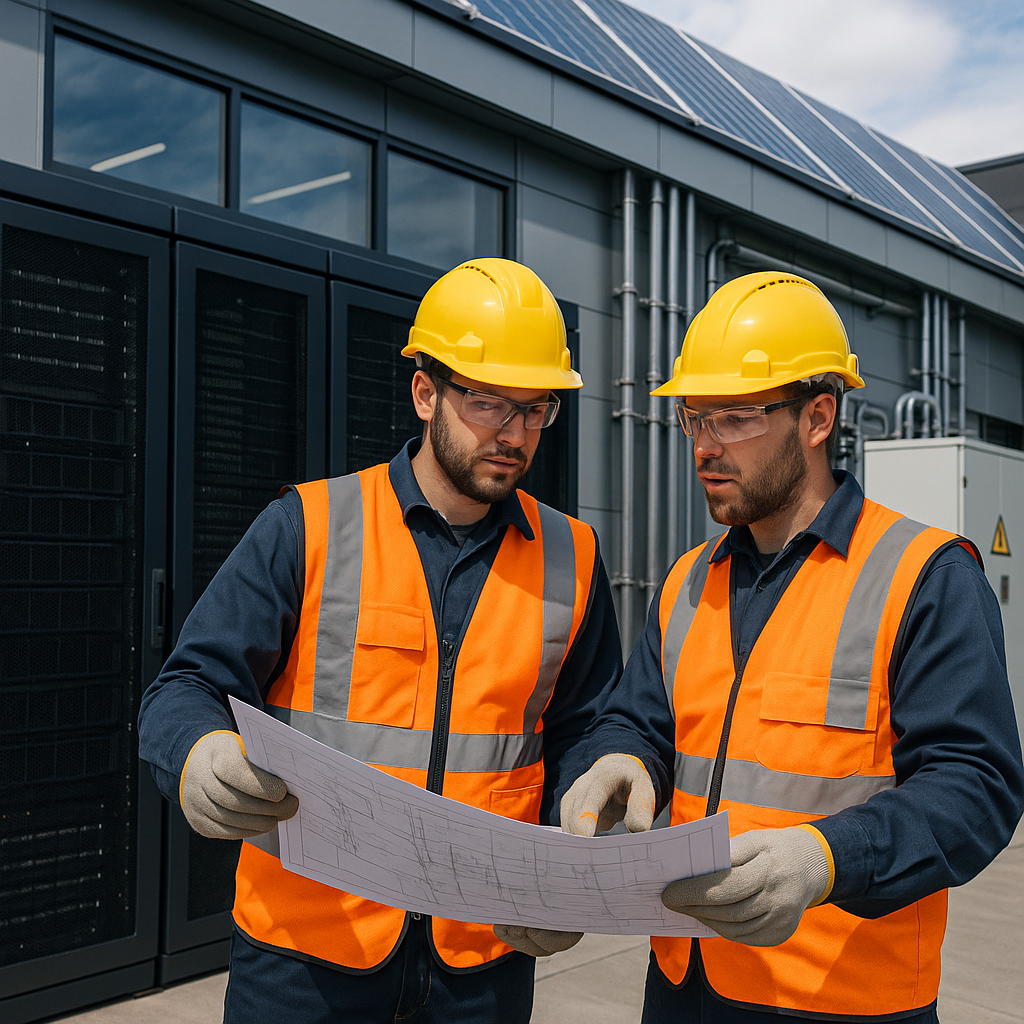
Solar installations require electricians to navigate complex code sections governing photovoltaic systems, grounding requirements, and disconnect placements. Wind energy projects involve coordination with mechanical systems, high-voltage equipment, and utility-scale power distribution. Battery energy storage systems are becoming standard on commercial and industrial projects, requiring knowledge of charge controllers, thermal management, and emergency shutdown protocols. Each of these systems has unique compliance requirements that must be understood before breaking ground.
Data centers represent one of the most rapidly growing segments in electrical construction, driven by AI infrastructure expansion and the need for reliable, uninterrupted power. These facilities operate under NEC Article 645, which governs critical power systems and structured electronic equipment installations. Electricians working in this space must understand UPS systems, N+1 redundancy configurations, precision termination techniques, and control fundamentals. Contractors who master these systems position themselves for high-value projects with repeat clients who demand quality and accountability.
The modernization of electrical infrastructure is not optional. It is the foundation upon which renewable energy adoption depends. As more states adopt aggressive clean energy targets and federal incentives drive investment in green technology, the demand for electricians who can execute these installations will only intensify. The contractors who prepare their teams now will lead the industry for the next decade.
Critical Skills Electricians Need To Navigate The Clean Energy Transition
Code literacy is the foundation of professional electrical work, but the clean energy transition demands more than basic NEC knowledge. Electricians must develop proficiency in renewable-specific code sections, integration protocols, and compliance documentation. Understanding how to read and apply NEC Article 690 for solar photovoltaic systems, Article 706 for energy storage systems, and Article 645 for data center critical power is non-negotiable for anyone entering this market.
Field execution separates good electricians from great ones. Renewable energy projects often involve coordination with mechanical systems, structural teams, and utility providers. Installation sequencing matters. Termination precision matters. Documentation practices matter. A single missed step can delay commissioning, fail inspection, or create long-term system reliability issues. Strong field execution skills ensure that installations are completed correctly the first time, protecting both project margins and professional reputation.
Leadership development is often overlooked in technical training, but it is one of the highest-leverage skills in the electrical industry. Strong foremen increase output, reduce rework, and protect margins. If a foreman improves productivity by even 5–10%, the ROI on training pays for itself in weeks. Leadership training develops structured field leaders who understand sequencing, accountability, documentation, and crew coordination. As field leadership gaps are consistently cited as a primary cause of jobsite inefficiency and margin loss, investing in foreman development is essential.
Bridge The Gap Between Traditional And Renewable Electrical Work
The transition from traditional electrical work to renewable energy systems is not automatic. Electricians with years of experience in commercial or residential installations may struggle with the unique requirements of solar integration, battery storage, or critical power systems. The difference is not intelligence or work ethic, it is exposure to structured, code-focused training that applies directly to real-world installations.
At EnergizeUs EDU Inc., our programs are designed around what actually moves the industry forward: code literacy, field execution, infrastructure readiness, leadership development, and compliance competence. Our content reaches more than 25 million views every 30 days across platforms because electricians, installers, and contractors are hungry for structured training that applies directly to their work. They do not want fluff. They want clarity. They want confidence. They want advancement.
Our 2026 programs are structured around three critical pillars: Construction Foreman Training that develops field leaders who understand production execution and crew coordination. NFPA 70E Electrical Safety certification that strengthens workforce awareness and risk mitigation practices. Data Centers and NEC Article 645 training that prepares electricians for critical power infrastructure work, UPS systems, battery backup integration, and redundancy architecture. Each program is built for one purpose, to prepare electricians for the work that is available now and the work that is coming next.
A Sustainable Workforce Through Certifications And Hands-On Experience
Certifications matter because they provide a standardized framework for competency and accountability. Industry-recognized credentials like NFPA 70E, NCCER certifications, and specialized training in critical power systems demonstrate to clients, inspectors, and project managers that an electrician or contractor has met rigorous performance standards. Certifications also create career pathways, allowing electricians to advance from apprentice to journeyman to foreman to project leader with clear benchmarks along the way.
Hands-on experience is the other half of the equation. Electricians learn best by doing by pulling wire, terminating connections, troubleshooting circuits, and working through real-world installation challenges. Effective training programs combine classroom instruction with practical application, ensuring that students can execute what they have learned under jobsite conditions. This hybrid approach builds competence faster than theory alone and prepares electricians for the demands of production environments.
Building a sustainable workforce requires more than individual training. It requires a commitment from contractors, companies, and industry leaders to invest in structured education and professional development. It requires apprenticeship programs that integrate training with jobsite experience. It requires foreman development programs that prepare field leaders to manage teams, coordinate work, and maintain accountability. It requires safety training that protects workers and reduces liability. And it requires a recognition that workforce education is not an expense—it is an investment in operational capacity and competitive positioning.
The renewable energy transition will not succeed without a trained workforce capable of executing the installations, maintaining the systems, and innovating the infrastructure of tomorrow. The contractors who invest in education now will lead the industry for the next decade. The electricians who pursue certifications and hands-on training will find themselves in high demand with expanding career opportunities. The companies that build structured training into their operational model will outperform competitors who rely on reactive hiring and hope for the best.
Why EnergizeUs EDU Is Leading This Shift
EnergizeUs EDU Inc. is not a traditional training provider. We are electricians building programs for electricians. Our content reaches 25 million monthly views across platforms because it resonates with the field. It is direct, code-focused, and built around execution. We do not waste time on theory that does not apply to jobsite conditions. We focus on what matters: clarity, competence, and career advancement.
Our approach is straightforward. We identify the skills that contractors and electricians need to compete for high-value work. We build structured programs around those skills. We deliver training through a hybrid model that combines classroom instruction with hands-on application. We provide industry-recognized certifications that demonstrate competency to clients and inspectors. And we support students with continued access to resources, updates, and community connections through events, podcasts, and membership opportunities.
Our national reach with local delivery ensures that training is accessible across the United States, from Texas to Nevada to Illinois to Georgia. Our programs are designed around real demand, not abstract concepts. We see the jobsites. We talk to the contractors. We understand the challenges. And we build training that addresses those challenges head-on. Whether it is Construction Foreman Training to improve productivity and reduce rework, NFPA 70E certification to manage electrical hazards and compliance risk, or Data Centers and NEC Article 645 training to prepare electricians for critical power infrastructure work, our programs are built for one purpose—to prepare the workforce for the work that is available now and the work that is coming next.
We are committed to building builders and developing teachers. We believe that the future of the electrical industry depends on structured education that prepares electricians for the demands of renewable energy, critical power systems, and infrastructure modernization. We believe that strong foremen, safety-conscious crews, and code-literate electricians are the foundation of a sustainable workforce. And we believe that contractors who invest in training today will lead the industry tomorrow. That is why we do what we do. That is why electricians, installers, and contractors trust EnergizeUs EDU Inc. to deliver the training that matters.