skilled trades
builders convention
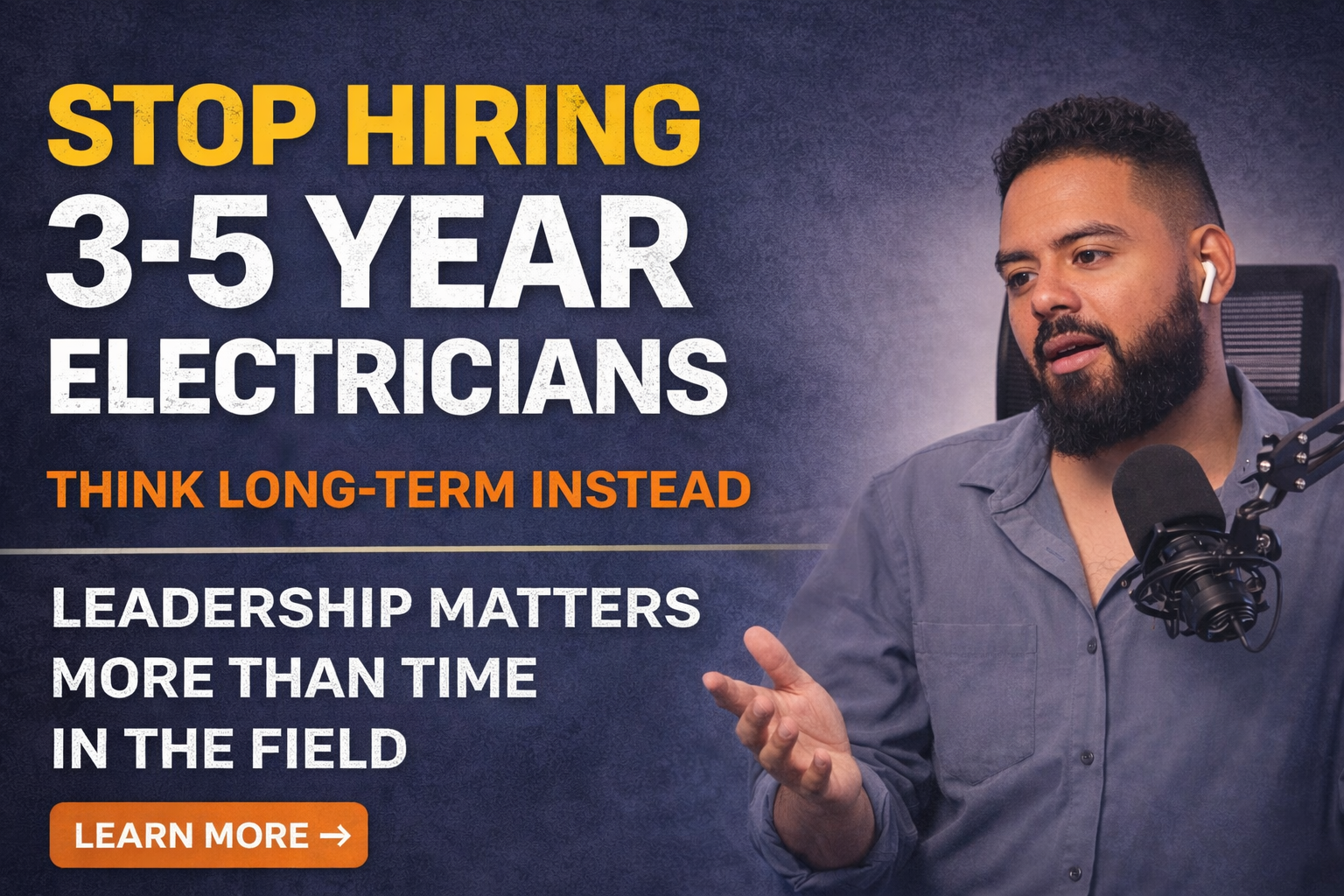

We have all seen it ... Must have 3–5 years of experience.
Contractors filter candidates by it. Recruiters rely on it. Owners use it as the ultimate benchmark for capability. But this industry-wide obsession with time-based hiring has created a fundamental flaw in how we build the electrical workforce. Not only that, we find one of the main stigmas of the trade, revlolves around the "i've been doing this for 30 years" mindset.
The uncomfortable truth is that time in the field doesn't guarantee competence. Someone can spend five years bending conduit, five years pulling wire, five years doing the same service calls, or five years working under poor leadership. That doesn't automatically produce a well-rounded electrician. It simply means they've been present for five years.
We've all seen it, contractors with 30 years in the field who still struggle with leadership, communication, organization, or adapting to new technologies. Time alone doesn't make someone untouchable. Time alone doesn't prove they've been doing things the right way. The industry confuses time with mastery, and that confusion is costing contractors quality talent, wasted training dollars, and endless hiring cycles.
When contractors insist on hiring someone with 3–5 years of experience, they're trying to reduce risk. They assume the candidate will require less training, work independently, understand jobsite expectations, and lead apprentices effectively. But that assumption often falls apart within the first few months. What you may actually be hiring is someone who only worked on one specific type of project, never learned leadership skills, was never responsible for communication with crews or clients, struggles under pressure or deadlines, and was trained inside a poor company culture.
Now you're paying top market wages for someone who still needs to be retrained. Many contractors know how this story ends: You hire someone with 'experience.' You invest months trying to integrate them. Then eventually you realize they don't fit the culture, they can't lead, and they don't have the discipline to grow. And now you're back in the hiring cycle again.
The skilled trades don't have a people shortage. They have a development shortage. Too many companies are trying to buy finished electricians instead of building them. That mindset creates two major problems: contractors overpay for 'experience' that doesn't translate to real capability, and they ignore high-potential candidates who lack the arbitrary years but have the discipline, drive, and teachability to become exceptional tradespeople.
The real question contractors should be asking isn't 'How many years have they worked?' Instead, they should be asking: Can they lead people? Can they communicate under pressure? Do they have the discipline to grow in the trade? Do they actually want to build a career in this industry? Those qualities determine whether someone becomes a future foreman, supervisor, or leader. Time alone does not.
The current hiring strategy has created a vicious cycle. Contractors compete for the same small pool of 'experienced' candidates, driving up wages and creating bidding wars. Meanwhile, apprentices and less experienced electricians who possess the right character traits, work ethic, and leadership potential are overlooked because they don't meet the arbitrary time threshold. This approach doesn't solve the electrician shortage.
What contractors are really searching for isn't years of experience. They're searching for reliability, competence, leadership ability, and cultural fit. But none of those qualities can be measured by counting years on a resume. The industry needs to stop using time as a proxy for capability and start evaluating what actually matters: skills, attitude, discipline, and the capacity to grow.
Energize Us Edu Inc structured program delivers something the open market can't: electricians who are trained to our standards, shaped by our culture, and developed with your company's systems and values embedded from day one. Instead of inheriting someone else's habits or culture we see everyday, you're creating tradespeople who understand how you operate, why you operate that way, and how to lead others through it.
NCCER-accredited apprenticeship programs provide performance-based, standardized training that aligns with licensing requirements and workplace safety standards. Apprentices should learn critical thinking, problem solving, communication, and customer service. They learn how to read plans, manage time, work under pressure, and lead crews. These are the skills that separate a capable electrician from a future foreman or superintendent.
Apprenticeships also solve the cultural fit problem. When you hire someone with '3–5 years of experience,' you're rolling the dice on whether they'll adapt to your company culture. When you develop an apprentice, you're shaping that culture from the beginning. They learn your expectations, your communication style, your quality standards, and your leadership philosophy. By the time they're journey-level, they're not just qualified, they're loyal, aligned, and ready to lead the next generation.
The return on investment is undeniable. Yes, apprenticeships require time, structure, and commitment. But the alternative constantly hiring, retraining, and rehiring 'experienced' electricians who don't fit, is far more expensive. Apprenticeships don't just fill positions. They build careers. And careers build companies.
The industry has relied too heavily on poaching talent from competitors and not heavily enough on developing new tradespeople. Training programs, particularly those that integrate real jobsite experience with structured curriculum, are the solution contractors have been overlooking.
Company-sponsored apprenticeship training creates a pipeline of skilled electricians who are ready to work, ready to lead, and ready to stay. These programs combine classroom instruction with hands-on application, ensuring apprentices understand both the theory and the practice. They learn electrical theory, safety protocols, code compliance, blueprint reading, and leadership skills all while earning a paycheck and contributing to real projects.
It's the integration of soft skills that the industry desperately needs. Communication. Problem solving. Time management. Customer service. These are the skills that turn a good electrician into a great one, and they're skills that can't be measured by years of experience. Training programs that emphasize these competencies produce electricians who are ready to lead crews, manage client relationships, and grow into supervisory roles.
It's time to change the hiring playbook. Instead of filtering candidates by years of experience, contractors should be evaluating for character, discipline, teachability, and leadership potential. These qualities are far better predictors of long-term success than an arbitrary number on a resume. The best electricians aren't always the ones with the most years—they're the ones with the right mindset and the willingness to grow.
Start by identifying what you actually need. Are you hiring someone to work independently on day one? Or are you willing to invest in someone who has the potential to become a leader in your company? If it's the latter, stop limiting your candidate pool to people with 3–5 years of experience. Look for individuals who demonstrate reliability, a strong work ethic, problem-solving ability, and a genuine interest in the trade. Those are the people worth developing.
Implement a structured onboarding and training process. Even if you hire someone with experience, they need to learn how your company operates. Create a clear pathway for skill development, leadership training, and career progression. This doesn't just improve retention—it improves performance. Electricians who see a future with your company will work harder, stay longer, and contribute more than those who view your company as just another stop on their resume.
Partner with Energize Us Edu Inc programs that align with your company's needs. Whether you sponsor apprentices directly or collaborate with training organizations, investing in workforce development is the most sustainable way to solve your hiring challenges. You'll build a team of electricians who are trained to your standards, aligned with your culture, and loyal to your company. That's not just a better hiring strategy—it's a better business strategy.
The electrician shortage won't be solved by fighting over the same pool of 'experienced' candidates. It will be solved by contractors who are willing to build, train, and develop the next generation of tradespeople. The companies that embrace apprenticeships, prioritize training, and hire for character over credentials will be the ones that dominate the market in the years ahead. The question isn't whether you can afford to invest in training. The question is whether you can afford not to.