
Electrician How-To Lesson · Contractors, foremen, journeymen and apprentices
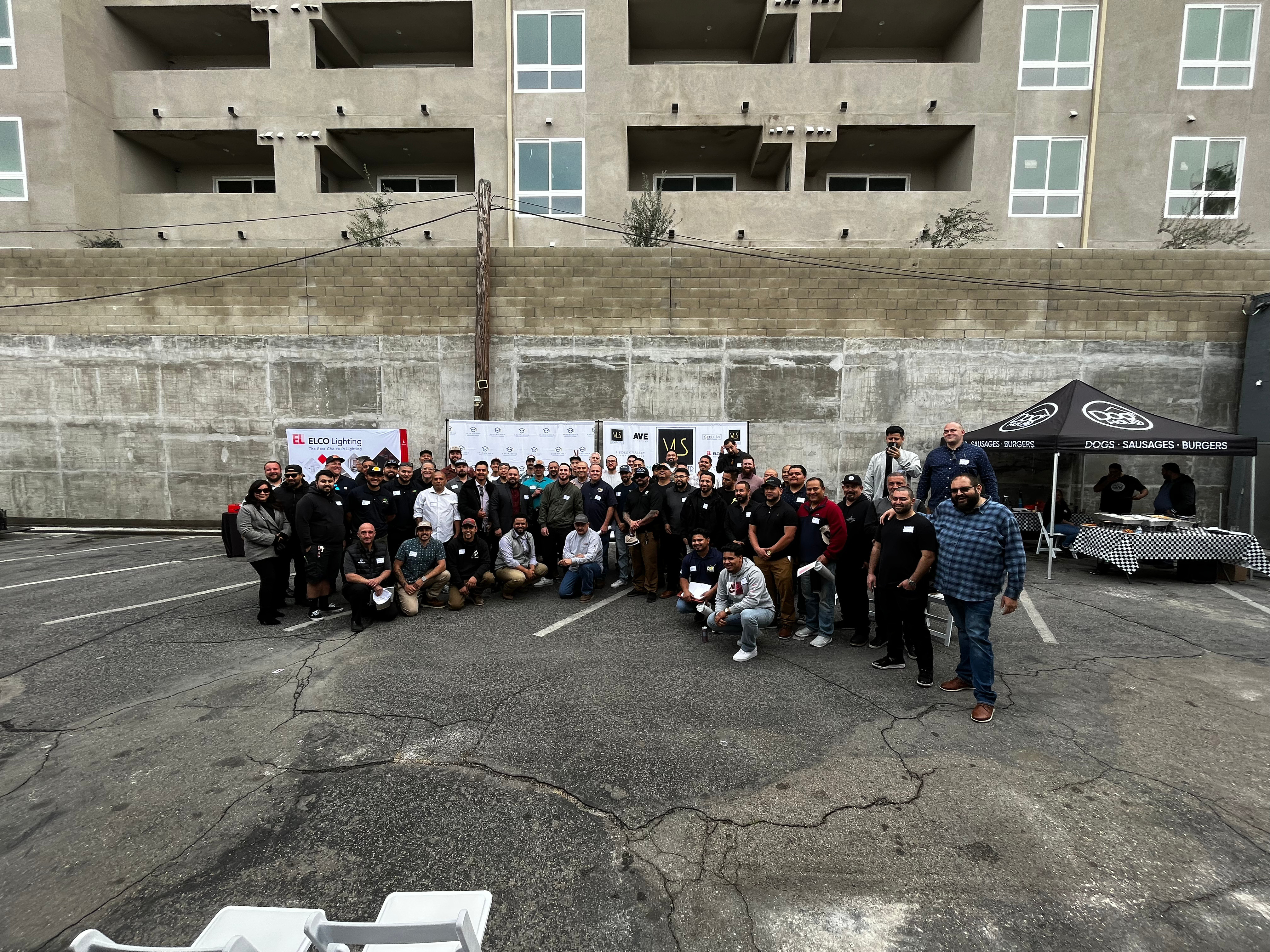
Useful networking starts with a clear question: what do you need to learn, and who might help you understand it? Choose a relevant setting, have a real conversation, offer something useful and follow through on the next step you actually agreed to.
You should leave with more than a pile of names. Our original Blueprint to Networking helps you choose where to go and what you want to get better at.
You went to the show. Now what?
Picture an electrical contractor returning from an industry event with business cards, photographs and a phone full of new contacts. A week later, the cards are still in a bag. The same estimating, scheduling or crew-development question is still unanswered.
This is an illustrative situation, not a documented customer story.
There was nothing wrong with attending. The missing piece was a purpose for the conversations and a useful next step afterward.
You do not have to turn every introduction into a sales pitch. Sometimes the most useful conversation is with another contractor who can explain how they improved a handoff you are struggling with. An apprentice might need advice about learning habits. A foreman might want to understand how another team plans its week.
Start there.
Choose a question before you choose the room
“I want to grow” is a direction. It does not give you much to ask someone.
Try a question grounded in your actual work:
- How do you get complete job information from the office to the field?
- How do you make time to train someone while keeping assignments clear?
- What do you review before committing a crew to another project?
The more specific the question, the easier it is to recognize a relevant conversation. You can also tell whether the answer helps instead of leaving with general motivation and no action.
Keep confidential company, customer and employee details out of the discussion. You can describe a process problem without sharing private records.
Pick a setting that fits the question
Our blueprint identifies four broad paths: industry events, business and trade groups, local community or business meetups, and online networking.
An industry event can bring you into contact with people, tools and methods outside your daily routine. A trade group may offer repeated conversations with people working through similar issues. A local business gathering may introduce a different perspective on customer service or operations. An online community can let you ask a focused question without traveling.
Choose based on the people and subject matter, your available time and the opportunity to participate. A large event is not automatically more useful than a small, relevant conversation. A paid membership is not required to begin learning from others.
Ask about the process, then listen to the limits
When someone shares an approach, go one level deeper. What problem were they trying to solve? What did they change? What resources did it require? What would they do differently?
That helps you understand the conditions behind the advice. A system that works for a larger office may need adaptation for a smaller electrical company. A good conversation can give you a question to investigate rather than an instruction to copy.
If the discussion turns to pricing, understand your own costs and make your pricing decisions independently. Our electrical pricing lesson keeps that work grounded in your business.
Contribute too. You might share a useful public resource, explain a lesson from your own work or ask a question that improves the discussion. Do not promise an introduction or a favor you cannot follow through on.
Make the follow-up fit the conversation
Before leaving, clarify whether a follow-up would be useful and what it would contain. Perhaps you agreed to send a resource, compare notes after trying a method or continue a discussion at a later event.
A simple message can reference the actual conversation: “We talked about keeping crew assignments clear. Here is the resource I mentioned. The section on confirming responsibility was the part I thought would help.”
That is a hypothetical example to adapt to a real exchange. It is not a reason to send the same message to everyone you meet or place them into an unsolicited campaign.
Follow through on what you offered. If there is no reply, respect that. The other person has their own work and priorities.
Use the original networking blueprint
Download the original Energize Us EDU networking graphic.
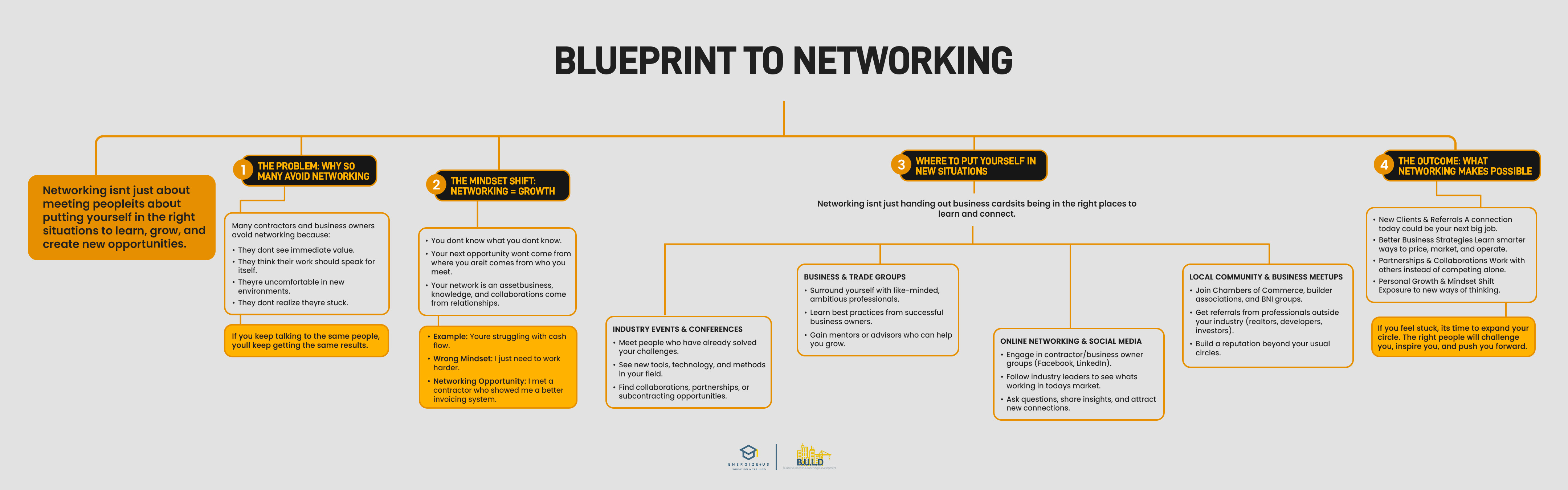
The graphic is a wide landscape resource. Open the full-size download to read each section. Its examples describe possibilities, not promises of referrals, revenue or partnerships.
Before your next conversation, write:
- One problem I want to understand better.
- Three questions that would help me learn.
- One useful observation or resource I can contribute.
Afterward, record what you learned, any agreed follow-up and one practical change you want to test. This is a website exercise applying the original graphic, not a new downloadable worksheet.
Questions electricians and contractors ask
How do I know whether networking was worth the time?
Look for a useful insight you applied, a question you clarified or a mutually agreed next step. Counting contacts alone does not tell you that.
What if I am new to the trade?
Ask about learning, preparation and professional habits. Be honest about your experience. You do not need to pretend to have answers to participate thoughtfully.
How do I turn what I learned into action?
Use the electrician goals lesson to choose a next step and review date. You can explore BULD for further contractor-development learning.
I’m Wilson Matthew Betances, and my mission is simple: Building the People Who Build Things. Take one thing from this lesson and put it to work. If it helped, keep learning with us.