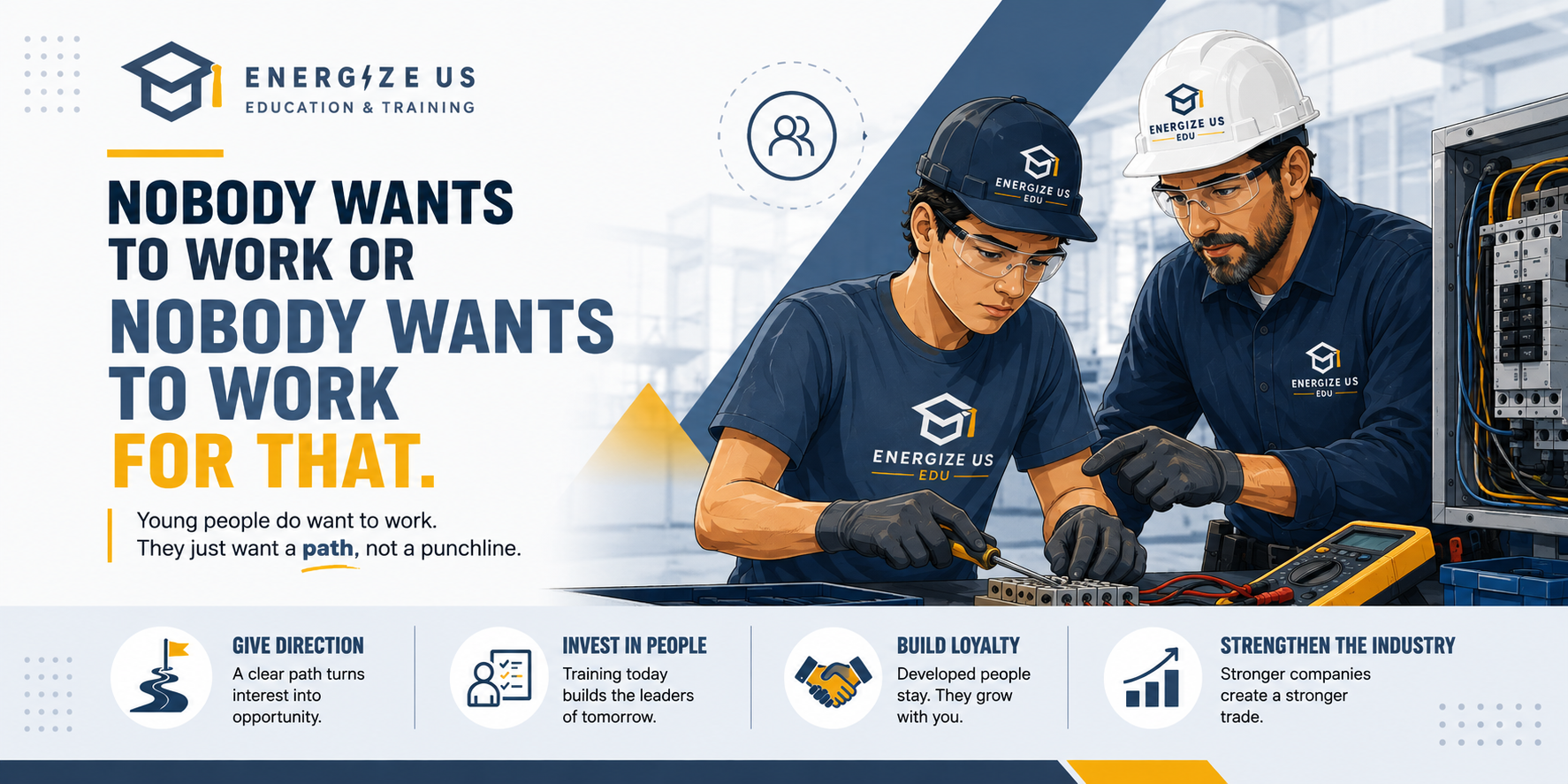
Company-sponsored electrical apprenticeship training connects structured instruction with paid, supervised work. For a contractor, the practical goal is to develop people who can apply what they learn to the company’s work, communicate clearly, and build skills over time.
What does company-sponsored apprenticeship training include?
A training plan brings together classroom or online instruction, supervised field experience, an identified mentor, and a way to record progress. The employer and training partner should agree on responsibilities, scheduling, costs, and the skills apprentices will practice.
A Registered Apprenticeship Program is a specific pathway approved by the U.S. Department of Labor or a State Apprenticeship Agency. It includes paid work, mentoring, related instruction, progressive wages, and an industry credential. Purchasing coursework alone does not establish a Registered Apprenticeship Program.
What is the employer’s role?
Employers provide the work environment where learning becomes practice. A useful plan identifies who supervises each apprentice, how lessons connect with assigned work, and when the team reviews progress.
- Assign a mentor: name an experienced person who can explain tasks, demonstrate expectations, and give feedback.
- Plan the schedule: allow time for instruction and coordinate learning with project demands.
- Document progress: track the skills practiced, completed instruction, and areas that need more support.
- Explain the career path: discuss expectations, responsibilities, and how progress will be evaluated.
In a registered program, the sponsor has responsibility for its administration and operation. A sponsor may be an employer or another organization. See the official explanation of an apprenticeship program sponsor when deciding how your company will participate.
What should electrical apprentices learn?
Instruction and supervised practice should connect electrical theory with the work apprentices encounter. Topics include tools, drawings, electrical safety, code awareness, and installation methods. Communication, professionalism, and problem solving also belong in the plan.
Energize Us EDU’s electrical apprenticeship training covers NCCER Electrical Levels 1–4 and connects technical instruction with practical learning and apprentice progress tracking. Contractors can discuss how the instruction fits their workforce needs and location.
How do you evaluate a training partner?
Ask for a clear description of the curriculum, instructor experience, delivery format, progress reports, and employer responsibilities. Discuss the questions below before committing:
- Which skills and curriculum levels are covered?
- How will instruction fit around the company’s work schedule?
- Who supervises field learning and reviews progress?
- What records will the employer and apprentice receive?
- Which program, registration, or licensing requirements must be confirmed for the location?
- What are the costs and next steps for the proposed arrangement?
Questions contractors often ask
Can a small electrical contractor develop apprentices?
Start by assessing supervision, available work, scheduling, and the time the team can commit. Share those details with a training partner to determine a workable arrangement for your company.
Does taking a course automatically enroll someone in an apprenticeship?
Coursework, program enrollment, employment, and licensing are separate steps. Confirm the applicable pathway and responsibilities before making commitments to an apprentice.
How can Energize Us EDU help?
Energize Us EDU Inc. works with electrical contractors on technical instruction, hands-on learning, leadership, and workforce development. Send an apprenticeship training inquiry with your company and location so we can discuss your needs. Sending the form does not enroll you in a program.
Build the training plan around your crew
Bring your team size, location, current skill gaps, and training goals to the conversation. If your priorities also include estimating, follow-up, operations, and leadership, explore our contractor development program.